Multi-generation family trips in Japan: the logistics that make or break them
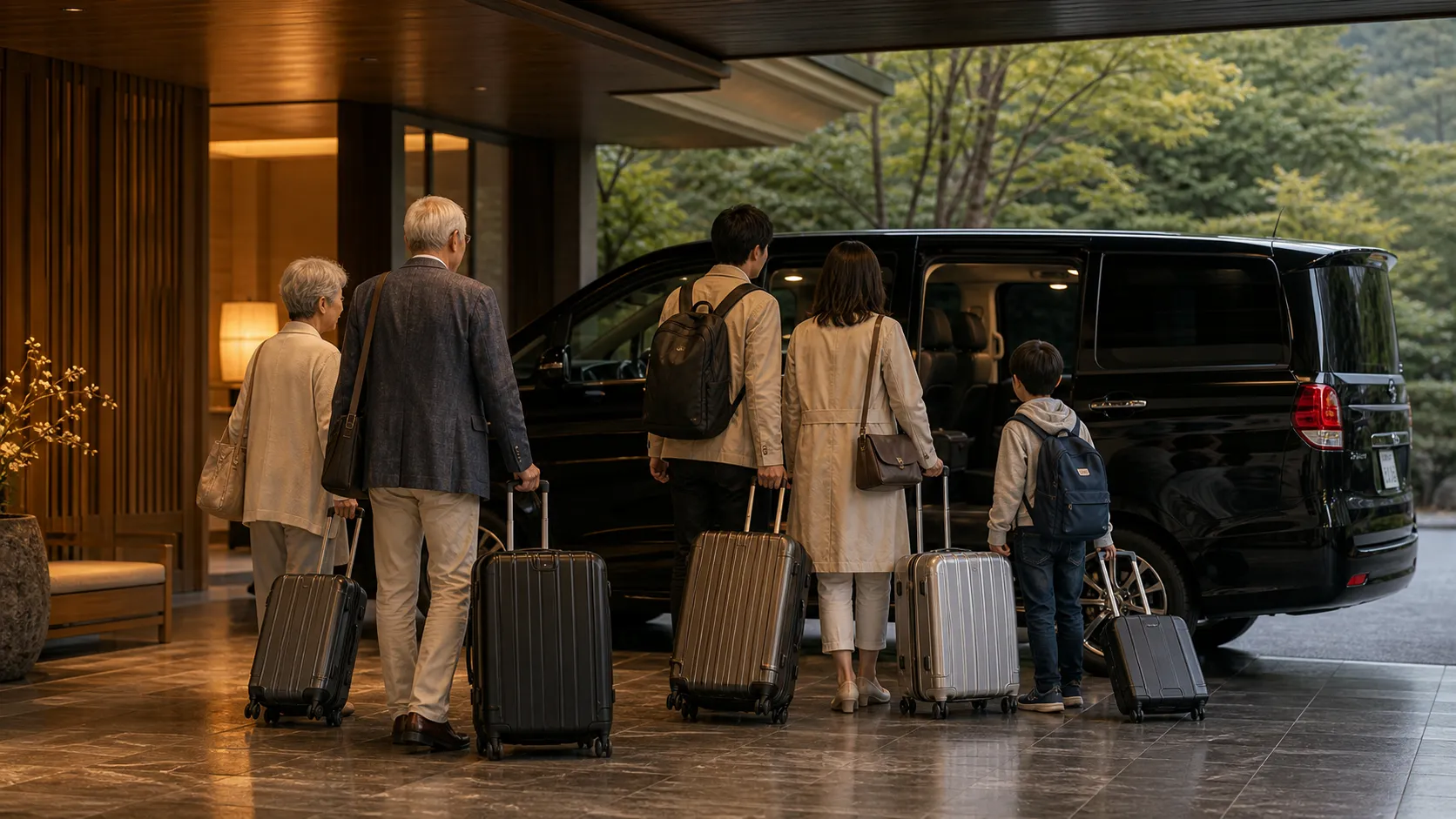
Multi-generation trips are the files where Japan rewards preparation and punishes assumptions. A grandparent, two parents and a seven-year-old do not travel at the same speed, sleep in the same room configuration, or recover from a long transfer the same way, and the Golden Route, for all its polish, is unforgiving of a plan that ignores those differences. This is the ground handler’s view of the logistics we treat as non-negotiable, and why each one quietly decides whether the trip feels effortless or exhausting.
Connecting rooms, confirmed in writing
Japanese hotels rarely guarantee adjacent or connecting rooms by default, and “requested” is not “confirmed.” Rooms are typically compact by Western standards, extra beds are limited, and occupancy rules are enforced literally: a triple is not simply a double with a rollaway. For a family that needs a grandparent beside the grandchildren, or a parent within earshot of a child, this has to be settled in writing before deposit, not discovered at check-in.
The practical rule we work to: name the sleeping arrangement for every room, every night, and get it confirmed by the property, not left as a “note on file.” When a specific configuration is essential rather than preferred, we say so to the hotel in those terms, because a preference and a requirement are handled very differently in Japan.
Pacing for ages 7 to 77
A schedule that delights a couple will exhaust a three-generation party. The oldest and youngest members set the real pace, and both tire faster than the itinerary’s optimistic minutes suggest. We build in slower mornings, shorter walking segments, and at least one true rest day, not a “light day” that still packs three sites.
Two details matter more than they look. First, jet lag hits the generations unevenly: a child may be wide awake at 4 a.m. while a grandparent needs a genuine recovery day, so the first 48 hours should be deliberately soft. Second, transfer times must be planned with real luggage and real family members in mind. The brochure’s “ten-minute walk to the station” assumes no suitcases, no strollers, and no one who needs to stop. A multi-generation group meets none of those assumptions.
Vehicles sized for the whole party: people and luggage
Public transport in Japan is superb, and for much of a trip it is the right choice. But a multi-generation group with full luggage often needs a private vehicle for key legs: airport transfers, the day with the most bags, or any segment where a train change with suitcases and a tired child turns a simple hop into an ordeal.
Sizing it correctly is where the detail lives. A vehicle rated for the headcount is not automatically rated for the headcount plus their suitcases: Japanese vans and cars carry less luggage than their seat count implies. We size for people and bags together, and for the specific legs where it earns its cost, rather than defaulting to a private car for the whole trip.
Dietary needs and ryokan dining across generations
A traditional ryokan kaiseki dinner is a highlight, and a logistical test. Set multi-course menus lean heavily on seafood and seasonal ingredients, and they are planned in advance, not adapted at the table. Allergies, a child’s plainer palate, and an elder’s dietary or texture needs all have to be communicated to the property well before arrival, in specific terms.
This is precisely where nuance cannot be lost in translation. “No shellfish” understood as “less shellfish” stops being a language problem and becomes a safety one. We confirm dietary requirements with each property directly and in writing, so the message travels from the family to the kitchen without passing through two rounds of approximation.
”Split days”: letting different ages do different things
The trap in multi-generation planning is forcing everyone through the same day. The fix is the deliberate split day: the same base, different plans, a reconvene point. Teenagers and a parent take on a longer temple-district walk or a hands-on experience; the youngest and a grandparent keep a gentler morning nearby and meet the others for lunch.
Split days need one thing to work: a base chosen so that “different” doesn’t mean “far.” We route them around a hub where the gentle option and the ambitious option start from the same hotel, so no one spends the reconvene window stuck on a train.
What to send us to quote a multi-generation file
A multi-generation quote is only as good as the brief behind it. The details that let us build instead of ask:
- Exact ages and mobility of every traveller, and any medical or dietary needs: these shape rooms, pacing and vehicles more than anything else.
- Room configurations that are requirements, not preferences: who must be beside whom, each night.
- The non-negotiables, stated up front: a wheelchair-aware route, a nap window, an anniversary dinner, a hard limit on transfer length.
- Dates and budget range, so the pacing and accommodation level are right the first time.
Get those into the first message and the conversation becomes a fine-tuning exercise rather than a series of clarifying rounds.